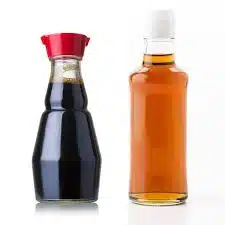
You’re standing in the Asian grocery aisle. Two bottles. One says “oyster sauce.” The other says “fish sauce.” They’re both brown. They’re both from Asia. They both come in similar-looking bottles. So… can you swap one for the other?
I made that mistake once. The user grabbed the fish sauce, even though the recipe specified oyster sauce. The stir-fry had an overwhelming saltiness and a strong fish flavor. Not terrible, but definitely not what I was going for. So let me clear this up once and for all.
Oyster sauce vs fish sauce – they’re completely different animals. Here’s everything you need to know.
Quick Answer: No, They’re Not the Same
| Feature | Oyster Sauce | Fish Sauce |
| Texture | Thick, syrupy | Thin, watery |
| Color | Dark brown | Amber / light brown |
| Taste | Sweet + savory | Salty + fishy |
| Smell | Mild, earthy | Strong, pungent |
| Made from | Oysters, sugar, cornstarch | Fermented fish (anchovies), salt |
| Best for | Stir-fries, glazes | Soups, dressings, marinades |
What Is Oyster Sauce? (Sweet, Thick, and Surprisingly Not Fishy)
Oyster sauce was started by accident in 1888. A Chinese cook named Lee Kam Sheung left his oyster soup simmering too long. The liquid turned thick and dark. He tasted it – and realized he’d created something amazing.
Today, oyster sauce is a thick, dark brown syrup made by cooking oysters in water until the liquid reduces. Then sugar, salt, and cornstarch are added for sweetness and body.
Here’s what surprises most people: oyster sauce does NOT taste fishy. Even though it’s made from oysters, the sweet and salty flavors completely cover any seafood taste. It’s mild, savory, and slightly sweet – almost like a gentler, thicker version of hoisin sauce.
Most store-bought oyster sauces contain actual oyster extract. But cheaper versions use mushroom extract instead. (Check the label if you have allergies or dietary restrictions.)
(Reader tip: I accidentally bought “vegetarian oyster sauce” once, thinking it was the real thing. It’s made from mushrooms. Tastes fine, but definitely different. Read those labels.)
What Is Fish Sauce? (Salty, Pungent, and Fermented)
Fish sauce is… well, it’s exactly what it sounds like. Liquid made from fermented fish.
Small fish (usually anchovies) are packed in salt in large barrels. They ferment for months – sometimes years. The liquid that seeps out gets collected. That’s fish sauce. No cooking. No thickening. Just salt, time, and fish.
The smell is strong. Open a bottle for the first time, and you might recoil. It’s pungent, fishy, and honestly a little intimidating. But here’s the secret: when you cook with it, that harsh smell mellows out into deep, savory umami. Your food won’t taste fishy – it’ll taste richer.
Fish sauce has been used for thousands of years. Ancient Romans made something called garum. Southeast Asia perfected it. Today, it’s essential in Thai, Vietnamese, Filipino, and Lao cooking.
The Key Differences Between Oyster Sauce and Fish Sauce
Taste (The Biggest Difference)
Oyster sauce is sweet first, then salt—a little savory. No fishiness. Think of it as a sweet-savory condiment that adds body and richness.
Fish sauce is salty first, then funky. Very fishy smell, though the cooked taste is more umami than fish. It adds depth and saltiness without sweetness.
Texture and Appearance
Oyster sauce is thick. Like, pour-it-slowly thick. Coats the back of a spoon—dark brown, almost black in some brands.
Fish sauce is thin. Pours like water. Amber or reddish-brown color. Transparent, not opaque.
How They’re Made
Oyster sauce is cooked and reduced. Takes hours or days. Oysters + water + sugar + thickeners.
Fish sauce is fermented. Takes months or years. Fish + salt + time. No heat involved.
Smell (The Honest Truth)
Oyster sauce smells mild and slightly sweet. Pleasant. You wouldn’t mind sniffing the bottle.
Fish sauce smells strong. Pungent. Some people find it off-putting straight from the bottle. That’s normal. It cooks out.
Note from the kitchen: The first time I used fish sauce, I thought I’d made a terrible mistake. My kitchen smelled like low tide. But after 5 minutes of cooking? That smell transformed into pure savory magic. Don’t judge it from the bottle.
Can You Substitute One for the Other?
Short answer: Yes, but your dish will taste different.
Using Fish Sauce Instead of Oyster Sauce
If you’re out of oyster sauce, you can use fish sauce. But you’ll need to adjust:
- Add sweetness – mix fish sauce with sugar or honey (roughly 1 tbsp fish sauce + 1 tsp sugar)
- Use less – fish sauce is much saltier, so reduce the amount by about half
- Expect a different flavor – your dish will be saltier and have that fermented depth, not sweet and mild
Works best in: Stir-fries, marinades. Avoid in: glazes or dipping sauces (too thin or too salty).
Using Oyster Sauce Instead of Fish Sauce
Going the other direction? Oyster sauce can replace fish sauce, but:
- Add salt – oyster sauce is less salty, so add a pinch of extra salt or a splash of soy sauce
- Expect sweetness – your dish will be sweeter than intended
- Texture change – the sauce will be thicker
Works best in: Stir-fries, braised dishes.
Avoid in: Soups, salad dressings, or anything that needs a thin, clear liquid.
How to Use Oyster Sauce (Best Dishes)
Oyster sauce shines in dishes where you want a glossy, savory coating:
- Stir-fries – beef with broccoli, chicken, and vegetables
- Noodle dishes – chow mein, lo mein
- Marinades – for chicken, pork, or beef (adds sweetness and helps browning)
- Glazes – brushed on roasted meats or vegetables
- Dipping sauces – mixed with soy sauce, vinegar, and chilies
My go-to: A spoonful of oyster sauce in any vegetable stir-fry. Takes it from bland to “what’s your secret?”
How to Use Fish Sauce (Best Dishes)
Fish sauce is for adding deep, savory saltiness:
- Soups and broths – pho, tom yum, sinigang
- Salad dressings – Vietnamese dipping sauce (nuoc cham), Thai green papaya salad
- Marinades – for grilled meats, especially pork and chicken
- Fried rice – a splash before the rice goes in
- Curries – adds depth to Thai and Lao curries
My go-to: A few dashes in spaghetti sauce. Sounds weird. Try it. The umami boost is incredible.
Storage Tips (Fridge or Pantry?)
Oyster sauce: Refrigerate after opening. Always. It contains sugar and oyster extract – both can spoil at room temperature. Keeps for about a year in the fridge.
Fish sauce: Can stay at room temperature. The high salt content preserves it. But it will last even longer in the fridge (like, years longer). I keep mine in the fridge because my kitchen is warm.
(Reader tip: Check your oyster sauce bottle. If the cap is crusty or the sauce looks separated, toss it. Fish sauce is almost immortal – if it smells fine, it’s fine.)
FAQs
No. Not at all. Even though it’s made from oysters, the sweet and salty flavors mask any seafood taste. It’s mild and savory. If your oyster sauce tastes fishy, it might be old or a weird brand.
Fish sauce is lower in calories and sugar but much higher in sodium. Oyster sauce has more sugar. Neither is “healthy” – they’re condiments used in small amounts.
No, traditional oyster sauce contains oysters. But vegetarian versions made from mushrooms exist. Look for “vegetarian oyster sauce” or “mushroom sauce.”
Soy sauce is the closest neutral option. It won’t replicate exactly, but it adds saltiness and umami. For oyster sauce’s sweetness, add sugar. For fish sauce’s funk, add a tiny bit of anchovy paste.
They serve different purposes. Fish sauce adds salt and fermented depth. Oyster sauce adds sweetness, body, and gloss. Using both gives you a more complex, balanced flavor.



2 thoughts on “Oyster Sauce vs Fish Sauce: What’s Better?”