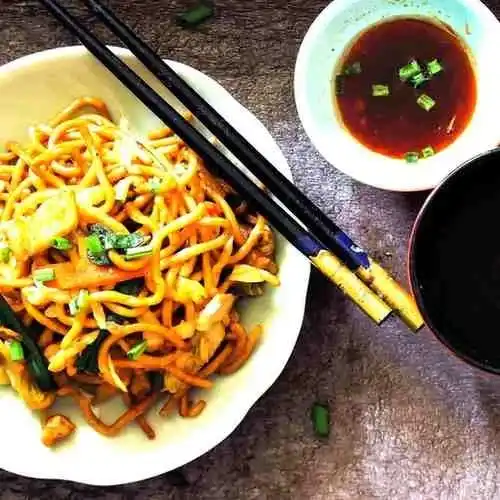
You’re standing in the Asian grocery store aisle. Two packages in your hands. One says, “Lo Mein noodles.” The other says, “Udon.” They both look like… well, noodles. But swap one for the other, and your dish will feel completely off.
I’ve done it and grabbed Udon when I meant to make Lo Mein. Vs Udon, confusion is real. The stir-fry turned into this weird, chewy situation that wasn’t bad but definitely wasn’t lo mein. So let me break down exactly what sets these apart – texture, taste, where they come from, and when to use each.
Quick Answer: Lo Mein vs Udon at a Glance
| Feature | Lo Mein | Udon |
| Origin | China | Japan |
| Thickness | Thin to medium | Thick (think pinky finger) |
| Texture | Soft, springy, tender | Dense, chewy, bouncy |
| Contains egg? | Usually yes | No (just flour, water, salt) |
| Best in | Stir-fried with sauce | Hot broth or cold with dipping sauce |
Where Do These Noodles Come From?
Lo Mein: The Chinese Takeout Legend
“Lo Mein” means “tossed noodles” in Cantonese. And that’s exactly what happens – boiled noodles get tossed in a savory sauce with veggies and protein. Originating in northern China, this noodle became huge in Chinese-American cuisine. Think of that white takeout box with the little wire handle. That’s lo mein territory.
Udon: Japan’s Thick, Comforting Noodle
Udon is pure Japanese comfort food. Thick, chewy, satisfying. Served in a hot dashi-based broth (kake udon), stir-fried (yaki udon), or even cold with a dipping sauce (zaru udon in summer). Regional variations exist across Japan – Sanuki udon from Kagawa is famously chewy, while Kishimen from Nagoya is flat and wide.
What’s the Texture Difference? (This is the Big One)
Lo Mein noodles are thin to medium thickness. Think spaghetti, but slightly thicker and more yellow (thanks to the egg). When cooked right, they’re soft and springy with a gentle bite. They don’t fight back when you chew them.
Udon is a 完全 不同 story. These are thick. Like, pinky-finger thick. Dense. Chewy. Almost bouncy. When you bite into a properly cooked udon noodle, it offers resistance before giving way. Some people describe it as “al dente on steroids.”
(Reader tip: The first time I cooked Udon, I thought I had undercooked it because it was so firm. Nope. That’s just Udon being Udon. Don’t boil it to death.)
Ingredients: What’s Actually in Each Noodle?
This matters more than you’d think.
Lo Mein noodles typically contain:
- Wheat flour
- Egg (this gives the yellow color and richness)
- Water
- Sometimes alkaline salts (like ramen, but milder)
Udon noodles are simpler:
- Wheat flour
- Water
- Salt
That’s it. No egg. No alkaline. Just flour, water, salt. The chewiness comes from the high hydration dough and how it’s kneaded – often stepped on or aggressively worked to develop the gluten.
How Are They Cooked and Served?
Lo Mein Cooking Method
Boil the noodles briefly – just until tender but still firm. Drain well. Then here’s the key: toss them in a pre-made sauce in a hot wok or pan with stir-fried vegetables and protein. The sauce coats every strand. It’s a dry noodle dish (no broth).
The sauce usually has:
- Soy sauce
- Oyster sauce
- Sesame oil
- Garlic and ginger
- A pinch of sugar
The smell? Savory, garlicky, with that distinct sesame oil aroma.
Udon Cooking Methods (Three Main Ways)
1. In hot broth (Kake Udon) – Boil the Udon, rinse briefly to remove excess starch, then place in a bowl of hot dashi-based broth. Toppings like green onions, tempura, or a raw egg go on top.
2. Stir-fried (Yaki Udon) – Thicker, heavier than lo mein. The noodles hold their shape and chewiness even after hitting the hot pan. Sauce is usually soy-based but lighter than lo mein.
3. Cold with dipping sauce (Zaru Udon) – Chilled noodles served on a bamboo mat with a small cup of concentrated dipping sauce (mentsuyu). Perfect for hot summer days.
Flavor Profile: What Do They Actually Taste Like?
Lo Mein noodles themselves have a mild eggy flavor. But honestly? They’re a vehicle for the sauce. The star here is the glossy, savory, slightly sweet coating that clings to every strand.
Udon is much more neutral. Almost bland on its own. That’s intentional – it lets the broth shine. A good udon broth (dashi, soy sauce, mirin, sake) is delicate but deeply umami. Or with curry udon, the thick Japanese curry sauce coats each chewy noodle beautifully.
Nutrition: Which Is Healthier?
This depends entirely on preparation, not just the noodle itself.
Lo Mein noodles have slightly more protein because of the egg. But a typical takeout lo mein is swimming in oil and sodium. One restaurant portion can easily hit 800-1000 calories and 2000 mg+ of sodium.
Udon noodles are lower in fat (no egg). Served in a light broth with veggies and lean protein? That’s a solid, balanced meal. The thickness also makes them more filling, so portion control happens naturally.
Note from the kitchen: I once tracked my homemade yaki udon vs takeout lo mein. Homemade Udon: 450 calories. Takeout lo mein: 890 calories. Big difference.
Popular Dishes for Each Noodle
Best Lo Mein Dishes
- Chicken Lo Mein – The classic takeout staple
- Shrimp Lo Mein – Garlic and sesame oil shine here
- Vegetable Lo Mein – Broccoli, carrots, snow peas, mushrooms
- Beef Lo Mein – Often with a darker, richer sauce
Best Udon Dishes
- Kake Udon – Simple hot Udon in clear broth with scallions
- Curry Udon – Thick Japanese curry sauce over Udon
- Yaki Udon – Stir-fried with veggies, meat, and soy-based sauce
- Niku Udon – Topped with sweet-simmered beef
- Zaru Udon – Cold noodles with dipping sauce (summer favorite)
- Tempura Udon – Hot Udon with crispy shrimp or vegetable tempura on the side
Can You Substitute One for the Other?
Short answer: Not really. Long answer: You can, but the dish will be different.
Using Udon in a lo mein recipe gives you a much chewier, heavier noodle that doesn’t soak up the sauce as well. The sauce sits on the surface.
Using lo mein noodles in an udon broth? They’ll get soggy fast because they’re thinner and have less structural integrity. The broth will overwhelm them.
I tried making yaki udon with lo mein noodles once when I was out of Udon. Disappointment. The noodles couldn’t handle the high heat of the stir-fry and turned mushy. Lesson learned.
Tools You’ll Need for Cooking Both
Soup bowls (for hot Udon)
Large pot for boiling noodles
Colander or strainer
Wok or large skillet (for lo mein or yaki udon)
Wooden chopsticks or tongs (for tossing)
Storage & Freezing
Fresh lo mein noodles: Refrigerate for 3-5 days. Freeze for up to 2 months. Cook from frozen – no need to thaw.
Dried lo mein noodles: Pantry for months. Just boil when needed.
Fresh Udon (vacuum-sealed): Refrigerate until use. Once opened, use within 2-3 days.
Frozen Udon: Many Japanese brands sell frozen pre-cooked Udon. These are actually great – drop them into boiling water for 1 minute to thaw and heat. Freeze for up to 3 months.
Cooked noodles (either type): Toss with a little oil to prevent sticking. Refrigerate in an airtight container for 2-3 days—reheat by dipping in hot water for 30 seconds, not by microwaving (which makes it rubbery).
Which One Should You Choose?
Pick Lo Mein when you want:
- A quick, savory, saucy stir-fry
- That classic Chinese takeout flavor
- Softer, more tender noodles
- A dish that comes together in under 20 minutes
Pick Udon when you want:
- A comforting, hearty bowl of noodles in broth
- That satisfying chewy, bouncy texture
- A lighter meal (especially with clear broth)
- To explore Japanese noodle culture
Or keep both in your pantry. That’s what I do.
FAQs
No. Lo mein is Chinese, thinner, contains egg, and has a softer texture. Udon is Japanese, much thicker, eggless, and famously chewy and dense.
Udon in a light broth is generally healthier – lower in fat and calories. But takeout lo mein with heavy sauce and oil can be high in sodium and calories. Preparation matters more than the noodle itself.
You can, but the texture will be very different – much chewier and heavier. The sauce won’t coat as well either. It’ll taste fine, but won’t be authentic lo mein.
The high-hydration dough and intense kneading process (sometimes literally stepping on the dough) develop strong gluten strands. That gluten gives Udon its signature bouncy, chewy texture.
Traditional lo mein noodles do contain egg, which gives them their yellow color and slightly rich flavor. Udon has no egg – just wheat flour, water, and salt.
Your Turn
Which noodle do you reach for more often? Are you team lo mein with that savory, saucy stir-fry? Or team udon with the chewy, comforting broth situation?
Drop a comment below – I’d love to hear your favorite way to cook either one. And if you’ve ever mixed them up in a recipe (no judgment here), definitely share that story too.


1 thought on “Lo Mein vs Udon Noodles: Which Is Better?”